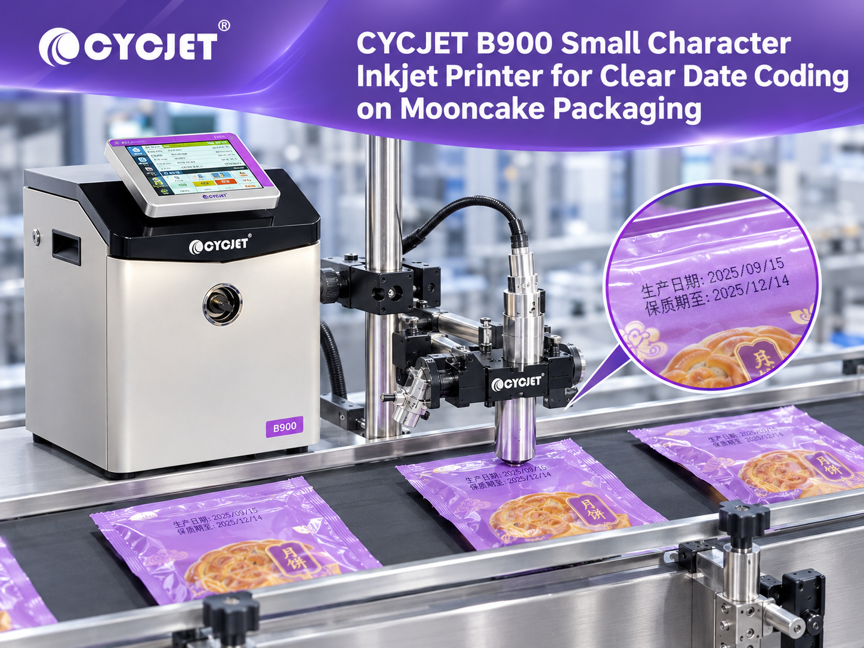
CYCJET B900 Small Character Inkjet Printer for Clear Date Coding on Mooncake Packaging

As the Mid-Autumn Festival approaches, mooncake manufacturers face increasing demand for efficient and reliable product identification. Production dates, expiry information and batch numbers need to be printed clearly on packaging while keeping pace with continuous production.

For food manufacturers, an industrial small character inkjet printer provides a flexible way to apply variable information directly onto packaging materials. CYCJET B900 is designed for this type of high-speed online coding application.

Clear Date Printing for Mooncake Packaging

The CYCJET B900 small character inkjet printer can print production dates, expiry dates, batch numbers, serial numbers, barcodes and other variable information on a wide range of packaging materials.

For mooncake packaging, the printer can be installed alongside the packaging or conveyor line, allowing date information to be printed automatically as products pass through the coding position. This helps maintain consistent identification across different production batches.

The B900 supports a 7-inch color touchscreen, providing an intuitive interface for creating and editing printing content. Operators can quickly update dates, batch information and other variable data according to different products.

Supporting Standardized Food Identification

GS1 standards provide standardized data structures for product information such as production dates, best-before dates and expiration dates. For example, GS1 uses Application Identifier (11) for production dates, (15) for best-before dates and (17) for expiration dates.

The B900 can print variable date and batch information required during the production process, helping manufacturers connect coding operations with their broader product identification and traceability workflows.

For the Chinese market, food labeling requirements also place greater emphasis on the visibility and readability of production dates and shelf-life information. Therefore, stable and clearly printed date information is an important part of modern food packaging.

B900 Designed for Continuous Production

The CYCJET B900 is built for industrial production environments. It supports high-speed continuous inkjet printing, with printing speeds of up to 2,600 characters per second, depending on the selected printing configuration and content.

The printer can achieve a minimum character height of approximately 1.2 mm, making it suitable for compact date and batch information commonly required on food packaging.

With support for multiple print lines and a variety of fonts and coding formats, the B900 can accommodate different packaging layouts and production requirements. Its non-contact printing method also allows information to be applied directly to moving products without requiring physical contact with the packaging surface.

Flexible Solution for Mooncake Production

Mooncake manufacturers often need to manage different flavors, package sizes and production batches during the same production period. The B900 allows printing content to be adjusted according to different production requirements, helping manufacturers reduce repetitive manual labeling operations.

It can also be integrated with conveyors, packaging machines and other production equipment to create a continuous coding process.

From mooncakes and bakery products to snacks and other packaged foods, reliable date coding is an important part of food production and traceability.

By combining reliable printing technology with flexible variable-data capabilities, CYCJET B900 small character inkjet printer enables food producers to apply clear date and batch information throughout the production process, helping build a more efficient and traceable packaging workflow.

Contact Person: David Guo

Telephone: +86-21-59970419 ext 8008

MOB:+86-139 1763 1707

Email: sales@cycjet.com

Web: https://cycjet.com/

New Food Labeling Requirements: How Can Coding Equipment Handle Designated Date Areas?

As food labeling requirements continue to evolve, food manufacturers are beginning to review their packaging designs and date coding processes in advance.

The Administrative Measures for Food Labeling and the new GB 7718-2025 General Standard for the Labeling of Prepackaged Foods will take effect on March 16, 2027. The new requirements further clarify how production dates and expiration dates should be displayed, including their location, font size, readability, and durability.

For food manufacturers, updating the packaging design is only part of the process. Ensuring that production dates and expiration dates can be printed clearly and consistently within the designated area is also becoming an important consideration for production lines.

1. What Is a “Designated Area” for Production Dates?

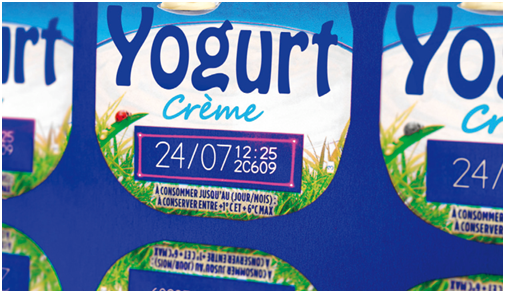
According to the Administrative Measures for Food Labeling, the production date and expiration date of prepackaged food should be marked in adesignated area on the package, and the printed information should not be easily removed.

The State Administration for Market Regulation has further explained that a designated area refers to a specific area on the package reserved for marking the production date and expiration date. The date information should not overlap with other text, symbols, numbers, or graphics on the label. Using a clearly visible border to define the date area is also encouraged.

If the designated area is not located on the principal display panel, the principal display panel should include clear guidance indicating where the production date or expiration date can be found.

This means food manufacturers need to consider not only whether the date is printed, but also where it is printed, how large it is, how clearly it can be read, and whether its position can remain consistent during production.

For continuous food packaging lines, these requirements place greater emphasis on the positioning and stability of coding equipment.

2. What Does the New Standard Mean for Date Coding Equipment?

Precise Control of Printing Position

Once a designated date area has been reserved on the package, the coding system needs to maintain a consistent printing position.

CYCJET industrial coding solutions can be configured with conveyors, photoelectric sensors, and other components. When a package reaches the predetermined position, the system can trigger the printer to apply the production date, batch number, or other variable information.

For continuously running food packaging lines, stable product conveying and accurate triggering are important for maintaining consistent coding positions.

Flexible Character Height Adjustment

The new requirements also specify minimum character heights for production dates and expiration dates.

According to the Administrative Measures for Food Labeling, the character height for these dates should generally be no less than 3.0 mm. When the maximum surface area of the package is less than 35 cm², the character height should be no less than 2.0 mm.
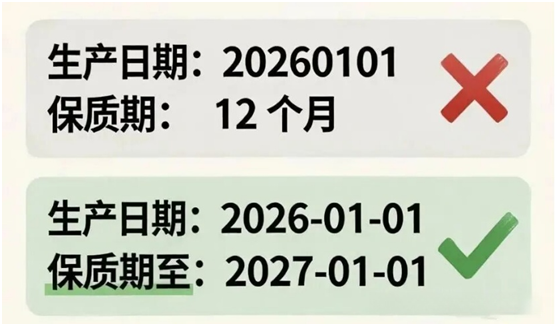
Therefore, when selecting coding equipment, manufacturers need to consider the package size, printing content, and dimensions of the designated date area rather than focusing only on printing speed.

CYCJET offers different types of coding equipment that can be configured according to application requirements, supporting the printing of dates, batch numbers, and other variable information on different food packages.

Clear and Durable Date Coding

The regulations also require production dates and expiration dates to have sufficient contrast with the background and remain difficult to remove.

Different packaging materials may therefore require different coding technologies.

For plastic films, laminated packaging, and flexible bags, inkjet coding can be selected according to the characteristics of the packaging surface and ink. For PET bottles, glass containers, and metal cans, laser marking can provide durable coding in suitable applications.

For transparent packaging, the actual solution should take into account the material, laser type, contrast, and marking position.

3. How to Choose Coding Equipment for Different Food Packaging?

Different packaging materials, production speeds, and coding requirements call for different marking solutions.

Flexible Bags, Laminated Films, and Food Packaging

For food bags, laminated films, and other flexible packaging, CYCJET Continuous Inkjet (CIJ) Printers can be considered.

CIJ technology is suitable for continuous online production and can be used to print production dates, expiration dates, batch numbers, and other variable information. The appropriate ink can be selected according to the packaging material and application requirements.

PET Bottles, Glass Containers, and Metal Cans

For beverage bottles, glass containers, metal cans, and similar applications, CYCJET laser coding machines can be selected according to the material and marking requirements.
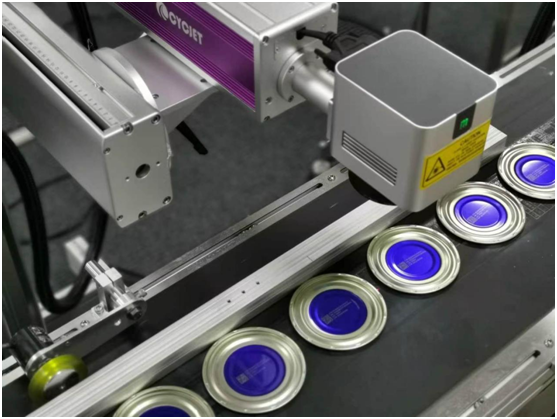
Laser marking creates identification directly on the material surface and does not require conventional ink. For suitable food packaging applications, it can provide clear and durable marking.

For transparent packaging, the actual solution should be evaluated based on the material, laser wavelength, marking contrast, and location of the date code.

Paper Boxes and Cartons

For paper boxes, cartons, and packages that require more characters, logos, or variable information, CYCJET high-resolution inkjet printers can be considered.
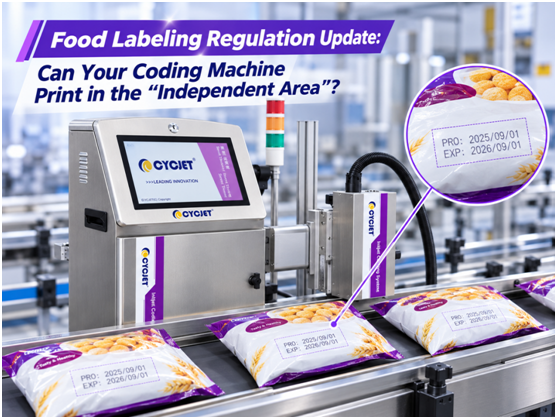
High-resolution inkjet solutions are suitable for applications requiring clear printing of text, logos, barcodes, QR codes, and other variable information. They can also be integrated into packaging lines where a designated date area has been reserved.

4. Coding Equipment Is Only Part of the Solution

For food manufacturers, the stability of the printing position does not depend entirely on the printer itself.

On an actual production line, packaging materials may experience changes in speed, spacing, or conveying position. Therefore, coding equipment is often integrated with conveyors, photoelectric sensors, encoders, and other components.

A typical online coding process may include:

Product Conveying → Photoelectric Detection → Printing Trigger → Date Coding

For high-speed food packaging lines, this type of integrated system can help control printing timing and position more consistently.

CYCJET can also provide corresponding coding equipment and automation solutions based on packaging material, product dimensions, production speed, and printing position.

5. Plan Ahead for Packaging and Coding Upgrades

The implementation of GB 7718-2025 and the Administrative Measures for Food Labeling will further encourage food manufacturers to improve how production dates and expiration dates are displayed.

For food manufacturers, it is recommended to evaluate coding equipment at the same time as packaging designs are being updated rather than waiting until the new packaging is already in production.

Key factors to consider include:

  • The size and position of the designated date area
  • Required character height and printing content
  • Compatibility between packaging materials and ink or laser technology
  • Production line speed and product spacing
  • Printing position stability
  • Coding clarity and durability

The right coding technology is an important part of putting an updated packaging design into practice.

CYCJET provides industrial coding and marking solutions including CIJ continuous inkjet printers, UV inkjet printers, high-resolution inkjet printers, CO₂ laser markers, fiber laser markers, and UV laser markers.

Based on the packaging material, production speed, and coding requirements, CYCJET can help food manufacturers evaluate suitable coding solutions and provide sample testing.

If your company is preparing for a food packaging upgrade or evaluating a new date coding solution,contact CYCJET to discuss your application requirements and find a suitable industrial coding solution.

Contact Person: David Guo

Telephone: +86-21-59970419 ext 8008

MOB:+86-139 1763 1707

Email: sales@cycjet.com

Web: https://cycjet.com/

Why CYCJET LU5T UV Laser Marking Machine Can Replace TTO Coding Systems?

In food, pharmaceutical, and daily chemical packaging industries, Thermal Transfer Overprinting (TTO) has been widely used for printing production dates, batch numbers, expiration dates, and traceability information on flexible packaging films.

However, as modern production lines continue to improve in speed, flexibility, and automation, traditional TTO systems are facing increasing challenges. The dependence on thermal transfer ribbons, frequent maintenance, and production interruptions has encouraged manufacturers to look for a more efficient and sustainable coding solution.

The Challenges of Traditional TTO Printing on Packaging Lines

High Consumable Costs

TTO systems rely on thermal transfer ribbons to complete the printing process. For high-speed packaging lines, ribbon consumption can become a continuous operating cost, including purchasing, storage, replacement, and waste disposal.

Over time, these additional expenses can significantly increase the total cost of production.

Frequent Production Interruptions

Ribbon replacement, printhead maintenance, and ribbon-related failures may interrupt production operations. For manufacturers running multiple shifts or high-volume packaging lines, even short downtime periods can affect overall production efficiency.

Unstable Printing Performance

During continuous operation, issues such as ribbon breakage, improper adhesion, or print quality degradation may result in unclear codes, missing information, or rejected products.

For industries requiring reliable traceability, stable and readable marking performance is essential.

Increasing Environmental Requirements

Used ribbons generate additional industrial waste and require disposal. With growing attention toward sustainable manufacturing and cleaner production processes, reducing consumable waste has become an important consideration for many manufacturers.

UV Laser Marking

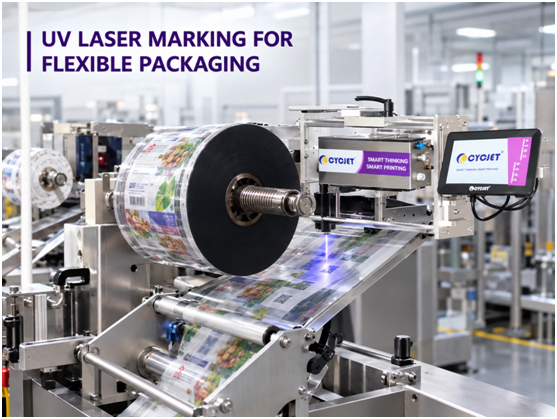
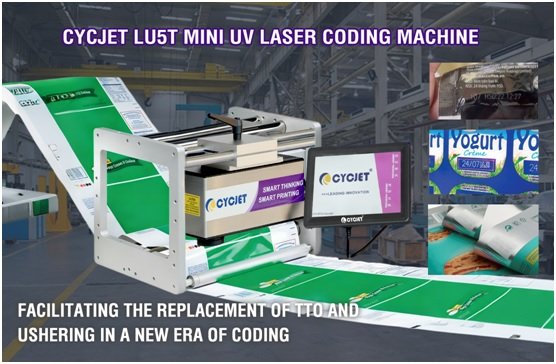
CYCJET LU5T UV Laser Marking Machine: A Smarter Alternative to TTO

To address these challenges, CYCJET developed the LU5T UV Laser Marking Machine as an advanced coding solution for flexible packaging and industrial applications.

By using ultraviolet laser technology, LU5T directly creates permanent marks on packaging materials without the need for ribbons or ink consumables.

1. No Ribbon Consumables, Lower Operating Costs

Unlike TTO systems, CYCJET LU5T does not require thermal transfer ribbons during operation.

The UV laser beam directly modifies the surface of the material to create high-quality marks, including production dates, batch numbers, QR codes, barcodes, and other variable information.

This helps manufacturers reduce consumable costs while maintaining clear, durable, and traceable product identification.

2. Compact Design for Easy Integration

The LU5T UV laser marking machine features a compact structure designed for modern packaging lines.

It can be integrated into existing production equipment and installed in limited spaces, making it suitable for replacing traditional TTO stations without major changes to the production layout.

For flexible packaging applications, LU5T provides manufacturers with a practical upgrade path from ribbon-based printing to laser coding technology.

3. Reduced Maintenance and Improved Production Efficiency

Without ribbon replacement, daily operation becomes simpler and maintenance requirements are reduced.

The stable laser marking process helps minimize downtime caused by consumable replacement and improves the overall efficiency of packaging lines, especially in high-speed and continuous production environments.

4. Clean, Durable and High-Quality Marking

UV laser technology is particularly suitable for sensitive packaging materials because it provides precise marking with minimal thermal impact.

The printed information features:

  • High contrast and clear readability
  • Excellent resistance to abrasion and environmental factors
  • Permanent marking performance
  • Suitable compatibility with various flexible packaging materials

These advantages make LU5T suitable for applications in food packaging, pharmaceutical packaging, cosmetics packaging, and other industries requiring reliable product identification.

Upgrade from TTO to UV Laser Coding with CYCJET LU5T

Replacing TTO with a UV laser marking machine is not simply an equipment upgrade—it represents a transition toward more efficient, cleaner, and smarter production.

With compact integration, low maintenance requirements, and no ribbon consumables, CYCJET LU5T helps manufacturers improve packaging line efficiency while reducing long-term operating costs.

For companies looking for a reliable TTO replacement solution, CYCJET provides professional laser coding technology and customized marking solutions, including sample testing and application support.

Contact Person: David Guo

Telephone: +86-21-59970419 ext 8008

MOB:+86-139 1763 1707

Email: sales@cycjet.com

Web: https://cycjet.com/

High-Precision Cold Processing! CYCJET UV Laser Marking Machines Empower High-Efficiency Large-Scale Industrial Production

In the ongoing transition of modern manufacturing toward large-scale, high-precision, and high-end production, product marking is no longer just a basic requirement for compliance and traceability—it has become a critical link for strict quality control and brand elevation. Traditional inkjet printers and conventional thermal laser systems often face drawbacks such as thermal deformation, rough edges, material damage, and poor adaptability, making them ill-suited for the stringent mass-production standards of precision components and premium packaging.

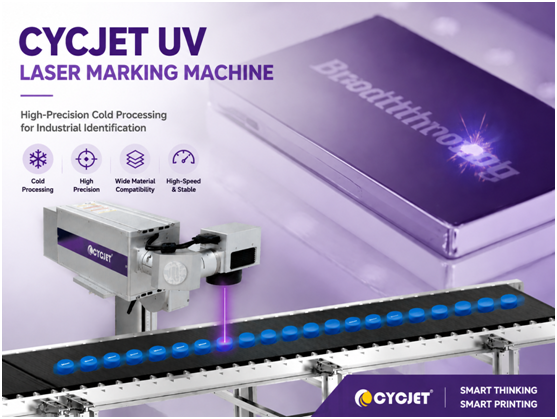
Leveraging unique cold-processing technology and micron-level marking accuracy, CYCJET UV Laser Marking Machines have become the premier choice for large-scale, high-efficiency production across electronics, semiconductors, daily chemicals, medical devices, precision hardware, and engineering plastics.

cycjet uv laser marking machine

“Cold Processing” Technology: Zero Thermal Damage for Micron-Level Precision

Unlike Fiber and CO2 lasers that rely on thermal processing, CYCJET UV laser marking machines utilize a 355nm short-wavelength UV laser source, operating via a photochemical mechanism.

Prevent Thermal Damage at the Source: High-energy UV photons directly break the molecular bonds on the material surface, causing the top layer to vaporize instantly. With virtually no heat conduction or thermal accumulation, the heat-affected zone (HAZ) is kept within micron levels—eliminating burning, warping, micro-cracking, or carbonization.

Exceptional Detail & Clarity:Combined with CYCJET’s superior beam quality and ultra-small focal spot, the high energy density enables flawless, ultra-fine marking of micro-text, high-density QR codes, complex patterns, and anti-counterfeiting marks with crisp edges and high contrast.

Superior Material Compatibility: Universal Solutions for Industrial Applications

CYCJET UV laser marking machines break through traditional material limitations, demonstrating exceptional industrial versatility:

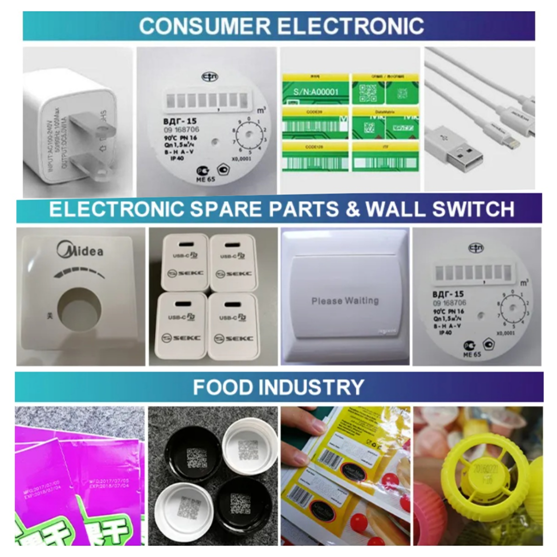
Heat-Sensitive & Soft Materials (Plastics / Silicone / Polymers):Delivers clean marks without melting or discoloration—ideal for electronic enclosures and flexible chemical packaging.

Brittle & Fragile Materials (Glass / Ceramics / Thin Films):Non-contact cold processing eliminates chipping and micro-fractures, fully preserving structural integrity and appearance.

Precision Metals & Composites:Creates permanent, corrosion-resistant markings that meet demanding traceability requirements for industrial parts.

Consumer electronics and electronic spare parts products

High-Speed “Marking-on-the-Fly”: Driving Cost Reduction and Efficiency in Automated Lines

Engineered for high-speed automated production lines in Industry 4.0 smart factories, CYCJET UV laser marking machines feature high-performance galvo scanners and intelligent control systems for seamless Marking-on-the-Fly :

  1. Seamless Line Integration: With fast response times and zero standby lag, the equipment easily integrates into automated conveyors and robotic systems for stable $24/7$ continuous operation.
  2. Zero Consumables & Low Maintenance: Operating without inks or solvents, the system eliminates nozzle clogging, lowers routine maintenance costs, and minimizes downtime—fully aligning with green manufacturing standards.
  3. Enhanced Yield Rates: Exceptional beam stability prevents illegible marks or defects, significantly raising final product yield rates and building brand trust.

Conclusion

With core advantages including damage-free cold processing, ultra-high precision, broad material compatibility, high-speed mass production, and maintenance-free operation, CYCJET UV Laser Marking Machines solve the key pain points of traditional marking equipment. In today’s era of standardized mass production, CYCJET empowers manufacturers to boost automation, lower operational costs, and secure product traceability with permanent, high-quality marking.

Contact Person: David Guo

Telephone: +86-21-59970419 ext 8008

MOB:+86-139 1763 1707

Email: sales@cycjet.com

Web: https://cycjet.com/

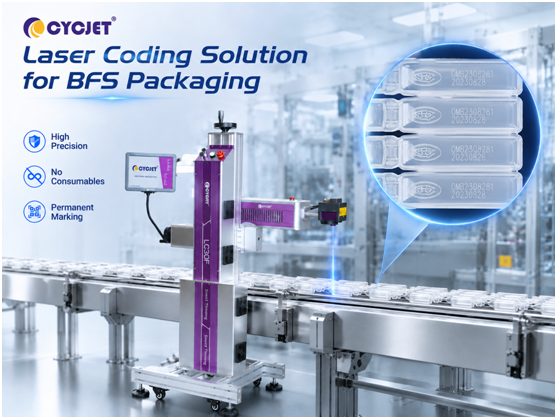
Pharmaceutical BFS High-precision Anti-tampering Laser Coning Solution

Unlike ordinary daily products that only require printing of the production date, BFS (Blow-Fill-Seal) packaging is mainly applied to injectables, ophthalmic preparations, biological preparations and other pharmaceutical products. It has higher requirements for production environment, packaging integrity and product traceability.

BFS packaging usually has thin walls, lightweight and complex structures. Some products also need to mark batch numbers, production dates, expiration dates, serial numbers and QR codes and other multiple pieces of information. How to ensure clear identification while avoiding packaging damage, contamination and later tampering has become an important issue in pharmaceutical packaging production.

Traditional inkjet printing methods are facing new challenges:

  1. Labeling process

Labeling is a common marking method for some BFS products. Although the operation is mature and fast, it may encounter problems such as warping, detachment, overflow of glue and label replacement during long-term production and transportation. For pharmaceutical products that require high reliability traceability, the label itself may also affect the stability of the identification.

  1. Traditional inkjet printing

Inkjet printing can meet the printing requirements of dates and batch numbers for some packaging, but for BFS packaging, which has high cleanliness and identification reliability requirements, it still needs to consider ink adhesion, wipe resistance, consumable management and potential pollution risks.

In particular, for traceable information that needs to be preserved for a long time, relying solely on ink marking may not meet the higher-level anti-tampering and permanent identification requirements.

Laser marking: A new choice for high-reliability identification in BFS packaging

In response to the requirements of pharmaceutical packaging for clarity, durability and anti-tampering capabilities, CYCJET provides laser marking solutions. Among them, the CYCJET fiber laser marking machine adopts a non-contact laser processing method, does not require traditional consumables such as ink and solvents, and can select appropriate laser parameters based on the material of the packaging and its accessories to achieve stable and long-lasting product identification.

  1. High-precision marking, clear and easily identifiable information

For traceable information such as batch numbers, dates, serial numbers, QR codes, etc., laser marking can form clear and stable marking effects. By reasonably matching laser power, frequency and scanning speed, the marking effect can be optimized for different materials to meet the requirements of pharmaceutical packaging for small characters and high-density information identification.

  1. No consumables, zero contact, reducing production processes

Unlike traditional inkjet printing, the CYCJET fiber laser marking machine does not use ink, solvents and other printing consumables. It adopts a non-contact processing method and does not cause problems of direct contact between the nozzle and the product.

For pharmaceutical manufacturers, this not only reduces daily consumable management but also simplifies equipment maintenance processes, providing a more stable marking method for automated production lines.

  1. Permanent marking, enhancing anti-tampering and traceability capabilities

The laser forms a stable marking effect on the material surface, has good wipe resistance and durability, and is not as easily replaced or erased as ordinary labels or ink. Combined with variable data such as batch numbers, serial numbers and QR codes, the CYCJET laser marking solution can further help pharmaceutical enterprises establish a product traceability system and improve the reliability of packaging identification.

  1. Compatible with automated production lines

The CYCJET fiber laser marking machine can be integrated with production lines for conveying, detection and vision systems, and complete automatic marking according to the production rhythm.

For large-scale BFS and related pharmaceutical packaging products that require continuous production, the automated method can reduce manual operations and improve the consistency and production efficiency of marking.

Application effects After adopting the CYCJET laser marking solution, pharmaceutical enterprises can precisely mark information such as production date, expiration date, batch number, serial number, QR code, etc. on the packaging materials according to actual packaging materials and marking requirements.

Compared with traditional labeling and inkjet coding, the laser solution has the characteristics of no consumables, zero contact, durable marking, resistance to smudging, and ease of integration with automation. It can effectively improve the stability and traceability of product markings.

For BFS pharmaceutical packaging, choosing the appropriate laser type, power, and marking parameters is also crucial. CYCJET can provide targeted laser coding solutionsbased on packaging materials, marking content, production speed, and production line structure, helping pharmaceutical enterprises achieve more reliable product marking and traceability management while maintaining production efficiency.

Contact Person: David Guo

Telephone: +86-21-59970419 ext 8008

MOB:+86-139 1763 1707

Email: sales@cycjet.com

Web:https://cycjet.com/

Keywords :

Fiber laser marking machine

Fiber laser printer

Laser marking equipment

Laser coding machine

High-speed laser marking machine

Flying laser marking machine

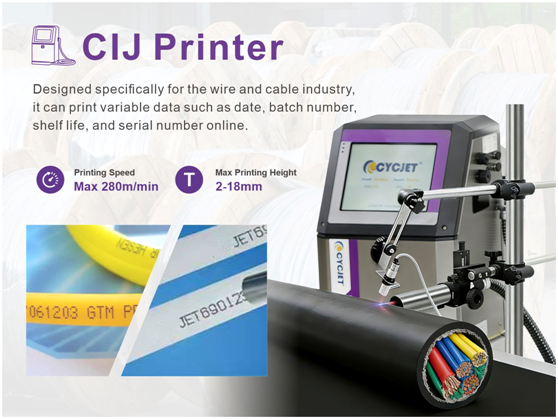
Frequent printing errors and character loss when marking wires and cables? CIJ inkjet printer solves these three major problems.

The production line was running when the inkjet printing suddenly became smudged. Stopping the machine, wiping the printhead, realigning—ten minutes passed. How many times a day does this scenario repeat itself?

In the production of wires and cables, any fading of inkjet printing or equipment downtime not only affects product identification but also directly impacts production line efficiency and delivery cycles. The complex surface characteristics of cable materials such as PVC, PE, and rubber, especially for black-sheathed cables, make the stability of the inkjet printing process a long-standing pain point in production line management.

Specifically, the three major challenges in inkjet printing are: unclear printing, insufficient adhesion leading to fading, and unstable equipment operation.

For cable manufacturers engaged in high-speed continuous production, ensuring long-term stable operation of the inkjet printing process while reducing maintenance costs has become an unavoidable issue.

What are the three major challenges in marking wires and cables?

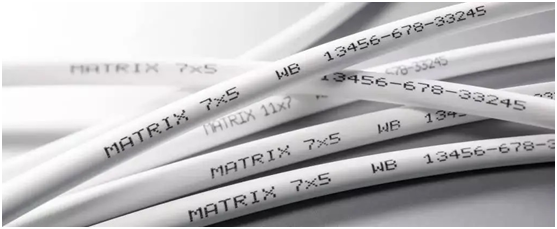
The markings on cable products typically include product model, specifications, voltage rating, production date, batch information, and length in meters. This information is not only used for production management but also serves as crucial evidence for product distribution and after-sales traceability.

With the continuous advancement of digital management in the manufacturing industry, cable companies’ requirements for marking equipment have evolved from simply “being able to print” to: clear printing, stable operation, accurate data, and convenient maintenance.

Specifically, the three major challenges of cable marking are mainly concentrated in the following three aspects:

  1. Difficulty in Material Adhesion

Wires and cables often use plastic materials such as PVC and PE. Some products have smooth surfaces and dark colors, placing higher demands on ink adhesion.

If the marking equipment and ink scheme are not properly matched, problems such as character edge diffusion, incomplete printing, blurred markings after friction, and code fading after prolonged use can easily occur.

Therefore, selecting a suitable coding scheme for different materials is fundamental to ensuring marking effectiveness.

  1. High-Speed Production Requires Stable Operation

Cable production typically employs continuous assembly line operations with a fast production pace.

The coding equipment needs to maintain stable printing, ensuring long-term reliability of ink supply, printhead status, and data transmission.

Frequent downtime for maintenance not only impacts production efficiency but also increases labor and management costs.

  1. High Requirements for Environmental Adaptability

Cable production sites may involve dust, oil, and temperature fluctuations.

The coding equipment needs to possess good environmental adaptability to minimize operational anomalies caused by on-site factors.

How does CIJ inkjet printer overcome three major challenges?

For the continuous production and stable marking needs of the wire and cable industry, small character inkjet printers remain one of the most widely used solutions.

Its advantages are mainly reflected in the following three aspects:

  1. High-speed printing, matching continuous production rhythm

Small character inkjet printers can be installed on cable production lines, adjusting printing speed in real time according to the production line speed. They are suitable for continuous production scenarios involving wires, cables, and pipes, meeting the needs of long-term operation.

  1. Automatic cleaning design, reducing maintenance pressure

Printhead stability directly affects equipment operating efficiency. Inkjet printers with automatic cleaning functions can effectively reduce the risk of printhead clogging, reduce the frequency of manual maintenance, and improve equipment operating stability.

Taking the CYCJET small character inkjet printer as an example, its integrated ink path design and automatic cleaning function are a common configuration solution for continuous production scenarios in the cable industry.

3. Integrated Ink Path Design Enhances Printing Reliability

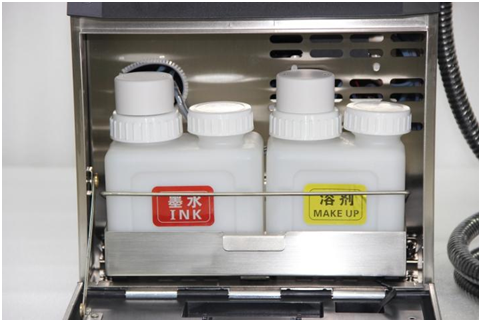
A stable ink path system is crucial for ensuring printing quality. An integrated ink path design reduces printing anomalies caused by ink supply fluctuations during operation, while simultaneously improving the long-term reliability of the equipment.

How to Reduce the Overall Cost of Wire and Cable Coding?

Marking costs are not limited to ink consumption; they also include equipment maintenance time, downtime losses, rework costs, and labor management costs, among other factors.

Enterprises can optimize their systems in three ways:

First, choose suitable solutions to reduce reprinting. Select appropriate inks and equipment based on the cable material to avoid rework and repeated printing due to insufficient adhesion.

Second, improve equipment stability to reduce maintenance costs. Stable ink path design and automatic cleaning functions can reduce the frequency of manual maintenance and improve production continuity.

Third, focus on long-term operating costs. The selection of coding equipment should not only consider the purchase price but also the maintenance, consumables, and downtime costs during long-term use.

CYCJET Inkjet Marking: Enabling Stable Coding for Wires and Cables

CYCJET specializes in industrial inkjet marking equipment and automated coding solutions. With over 20 years of experience, we provide small character inkjet printers, white inkjet marking solutions, and automated inkjet marking solutions tailored to the application needs of the wire and cable industry.

By combining equipment performance, ink path design, and industry application experience, CYCJET helps cable companies achieve: clearer markings, more stable operation, and more efficient production.

From simple character printing to product identification management, inkjet technology is becoming a crucial support for wire and cable companies to improve their production management capabilities.

Contact Person: David Guo

Telephone: +86-21-59970419 ext 8008

MOB:+86-139 1763 1707

Email: sales@cycjet.com

Web: https://cycjet.com/
Keywords :

Inkjet printer

Inkjet printing machine

Industrial inkjet printer

CIJ inkjet printer

Small character inkjet printer

Online inkjet printer

How to choose a laser coding solution for snack food packaging?

Snack foods such as potato chips, cookies, nuts, candies, and meat products come in a variety of packaging formats, with common materials including flexible plastic, paper cartons, plastic cups, and metal cans. Essential information—such as the production date, expiration date, batch number, and traceability code—must be clearly marked on the packaging surface.

In recent years, laser coding has become increasingly prevalent in the food packaging industry due to advantages such as clear, smudge-resistant markings and the elimination of ink consumables. However, as different materials respond differently to laser technology, equipment selection requires considering not only power output but also the specific packaging material, production line speed, and the content to be marked.

Flexible Plastic Packaging: UV Lasers Are the Preferred Choice

Potato chips, nuts, cookies, and meat products are commonly packaged using PE, PET, BOPP, and multilayer composite films. These materials are thin and have smooth surfaces, making them prone to shrinking or deforming when exposed to heat.

UV lasers have a minimal heat-affected zone and produce clear markings on packaging surfaces, making them particularly suitable for printing production dates, batch numbers, QR codes, and traceability codes. Marking results can vary significantly depending on the film’s color, coating, and composite structure; therefore, sample testing using actual packaging should be conducted before finalizing the equipment selection.

Paper Boxes and Labels: Choosing CO2 Laser printers

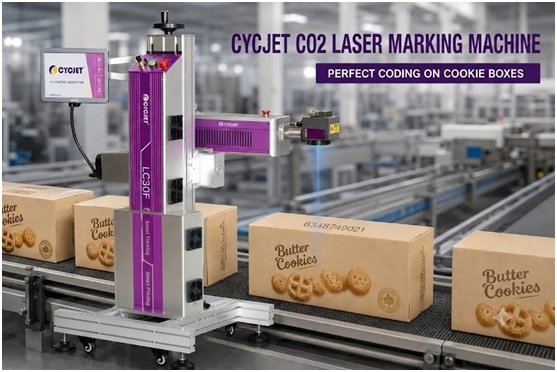
CO2 laser printers are typically well-suited for marking items such as biscuit boxes, candy boxes, nut gift boxes, paper cards, and paper labels.

CO2 laser printers are effectively absorbed by paper, cardboard, and certain coated materials, creating clear marks through a change in surface color. They offer advantages such as high speed, no consumables, and suitability for in-line production.

If the paper box surface features lamination, varnish, or a special coating, the marking contrast must be tested beforehand to avoid issues such as insufficient contrast or surface damage.

Metal Cans and Lids: Choose a Fiber Laser printer

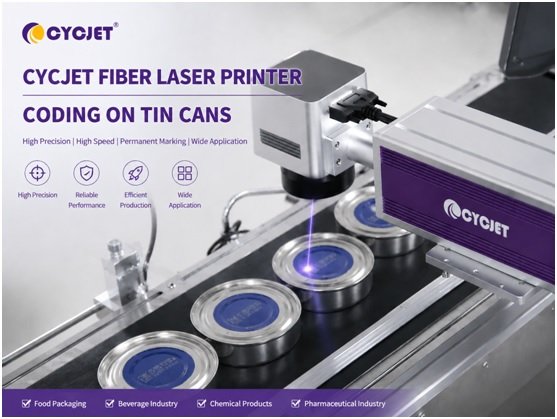
Fiber laser printers are typically the preferred choice for coding packaging such as nut cans, candy tins, metal boxes, and aluminum lids.

Fiber lasers are better suited for metal materials and can mark dates, batch numbers, QR codes, serial numbers, and anti-counterfeiting information; the resulting marks are wear-resistant and durable. If the metal surface has a coating or paint, color contrast can be achieved by removing the top layer, though parameters must be carefully controlled to avoid compromising the packaging’s appearance.

Plastic Cups and Rigid Plastics: Prototype First, Then Select the Machine Model

Jelly cups, plastic jars, plastic containers, and bottle caps are commonly made from materials such as PP, PE, PET, and ABS.

Even with the same type of plastic, variations in color, additives, and surface treatment can result in vastly different coding outcomes. Generally, UV lasers are the first choice for testing transparent, light-colored, or heat-sensitive plastics; fiber lasers can be tested on certain dark-colored plastics; and CO2 lasers can be tested on materials with good absorption characteristics.

Three key factors must be confirmed when selecting a machine model:

Production line speed: Conveying speed, product spacing, and output per minute.

Coding content: Standard dates versus dynamic QR codes or “one-item-one-code” systems; these entail different requirements for the equipment and control systems.

Packaging safety: For flexible packaging, the goal is not merely achieving deep color; one must also avoid burn-through, deformation, and any compromise to seal integrity.

When selecting a laser coding solution for snack food packaging, the following principles should be observed:

For flexible plastic packaging, prioritize testing with UV lasers; for paper cartons and paper labels, prioritize CO2 lasers; and for metal cans and lids, prioritize fiber lasers. For rigid plastics, sample testing is required based on the specific material and color.

Determining the truly optimal solution requires a comprehensive assessment that considers packaging materials, surface coatings, coding content, production line speeds, and actual marking results. Before purchasing equipment, it is recommended to submit actual samples for testing to determine the appropriate laser type, power, and system configuration.

Contact Person: David Guo

Telephone: +86-21-59970419 ext 8008

MOB:+86-139 1763 1707

Email: sales@cycjet.com

Web: https://cycjet.com/
ALT400H Large Format Industrial inkjet Printe(High-resolution printer)

This system is in online-editing for easy operation, with the color touch screen panel. Built-in multiple Chinese-English characters which owns the dot matrix fonts and printing fonts. You can adjust the size and height of fonts at random. The special anti-counterfeit font meet the requirement of prevent from fake goods.

CYCJET ALT360 Handheld Inkjet Printer

* CYCJET ALT360 Handheld Inkjet Printing adopts original UK high resolution printhead, which is with high stability proformance and clear printings.

* This model can print 1–18mm font size. Within 18mm printing height, it can print multi-lines like three, four or five, even ten lines.

* It has color touch screen, with which you can input the printing info directly, no need to connect with PC.