

Snack foods such as potato chips, cookies, nuts, candies, and meat products come in a variety of packaging formats, with common materials including flexible plastic, paper cartons, plastic cups, and metal cans. Essential information—such as the production date, expiration date, batch number, and traceability code—must be clearly marked on the packaging surface.
In recent years, laser coding has become increasingly prevalent in the food packaging industry due to advantages such as clear, smudge-resistant markings and the elimination of ink consumables. However, as different materials respond differently to laser technology, equipment selection requires considering not only power output but also the specific packaging material, production line speed, and the content to be marked.
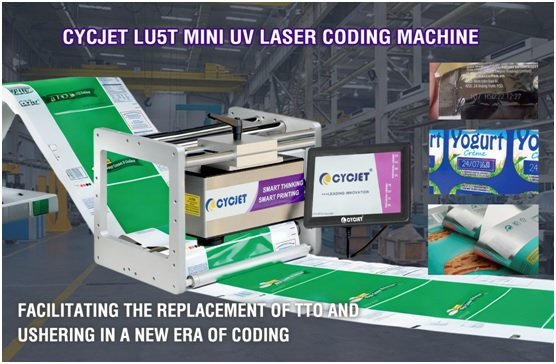
Flexible Plastic Packaging: UV Lasers Are the Preferred Choice
Potato chips, nuts, cookies, and meat products are commonly packaged using PE, PET, BOPP, and multilayer composite films. These materials are thin and have smooth surfaces, making them prone to shrinking or deforming when exposed to heat.
UV lasers have a minimal heat-affected zone and produce clear markings on packaging surfaces, making them particularly suitable for printing production dates, batch numbers, QR codes, and traceability codes. Marking results can vary significantly depending on the film’s color, coating, and composite structure; therefore, sample testing using actual packaging should be conducted before finalizing the equipment selection.
Paper Boxes and Labels: Choosing CO2 Laser printers
CO2 laser printers are typically well-suited for marking items such as biscuit boxes, candy boxes, nut gift boxes, paper cards, and paper labels.
CO2 laser printers are effectively absorbed by paper, cardboard, and certain coated materials, creating clear marks through a change in surface color. They offer advantages such as high speed, no consumables, and suitability for in-line production.
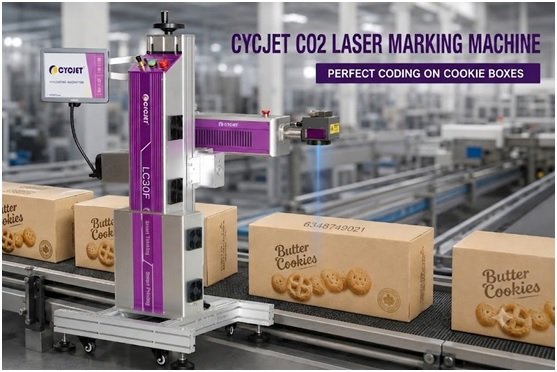
If the paper box surface features lamination, varnish, or a special coating, the marking contrast must be tested beforehand to avoid issues such as insufficient contrast or surface damage.
Metal Cans and Lids: Choose a Fiber Laser printer
Fiber laser printers are typically the preferred choice for coding packaging such as nut cans, candy tins, metal boxes, and aluminum lids.
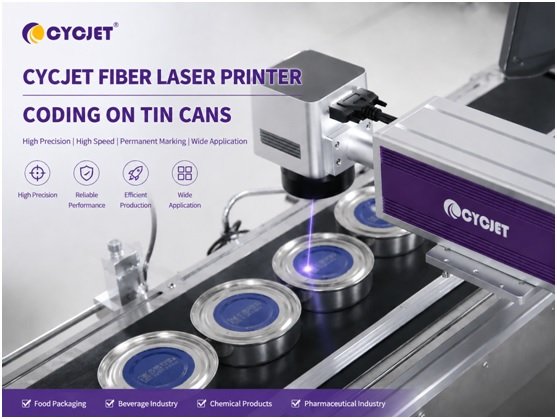
Fiber lasers are better suited for metal materials and can mark dates, batch numbers, QR codes, serial numbers, and anti-counterfeiting information; the resulting marks are wear-resistant and durable. If the metal surface has a coating or paint, color contrast can be achieved by removing the top layer, though parameters must be carefully controlled to avoid compromising the packaging’s appearance.
Plastic Cups and Rigid Plastics: Prototype First, Then Select the Machine Model
Jelly cups, plastic jars, plastic containers, and bottle caps are commonly made from materials such as PP, PE, PET, and ABS.
Even with the same type of plastic, variations in color, additives, and surface treatment can result in vastly different coding outcomes. Generally, UV lasers are the first choice for testing transparent, light-colored, or heat-sensitive plastics; fiber lasers can be tested on certain dark-colored plastics; and CO2 lasers can be tested on materials with good absorption characteristics.
Three key factors must be confirmed when selecting a machine model:
Production line speed: Conveying speed, product spacing, and output per minute.
Coding content: Standard dates versus dynamic QR codes or “one-item-one-code” systems; these entail different requirements for the equipment and control systems.
Packaging safety: For flexible packaging, the goal is not merely achieving deep color; one must also avoid burn-through, deformation, and any compromise to seal integrity.
When selecting a laser coding solution for snack food packaging, the following principles should be observed:
For flexible plastic packaging, prioritize testing with UV lasers; for paper cartons and paper labels, prioritize CO2 lasers; and for metal cans and lids, prioritize fiber lasers. For rigid plastics, sample testing is required based on the specific material and color.
Determining the truly optimal solution requires a comprehensive assessment that considers packaging materials, surface coatings, coding content, production line speeds, and actual marking results. Before purchasing equipment, it is recommended to submit actual samples for testing to determine the appropriate laser type, power, and system configuration.
Contact Person: David Guo
Telephone: +86-21-59970419 ext 8008
MOB:+86-139 1763 1707
Email: sales@cycjet.com
Web: https://cycjet.com/