


Introduction
Do you want better print quality from your inkjet printer?
Do you want fewer breakdowns?
Do you want your inkjet printing machine to last longer?
The answer is simple. Use original factory ink.
Of course, many customers may have doubts about OEM ink after learning about the cheap price of compatible inks. Is OEM ink really worth it? Yes, the genuine ink is the blood of your inkjet coding machine. This article will explain how original ink cartridges affect print heads, color accuracy, durability, cost, and warranty.
Learn the core difference between original factory ink and Third-party ink
The core difference: OEM manufacturers of inkjet printer design the ink the together with the printer hardware. The compatible ink suppliers can only guess.
Original factory ink, also known as genuine ink, are designed and manufactured by the original inkjet printer factory. The genuine ink undergoes thorough compatibility testing to ensure they do not excessively affect the printhead, thus guaranteeing the printhead’s lifespan.
While, third-party ink is produced by independent supplier who are not familiar with your inkjet coding machine.
How ink affects print head performance?
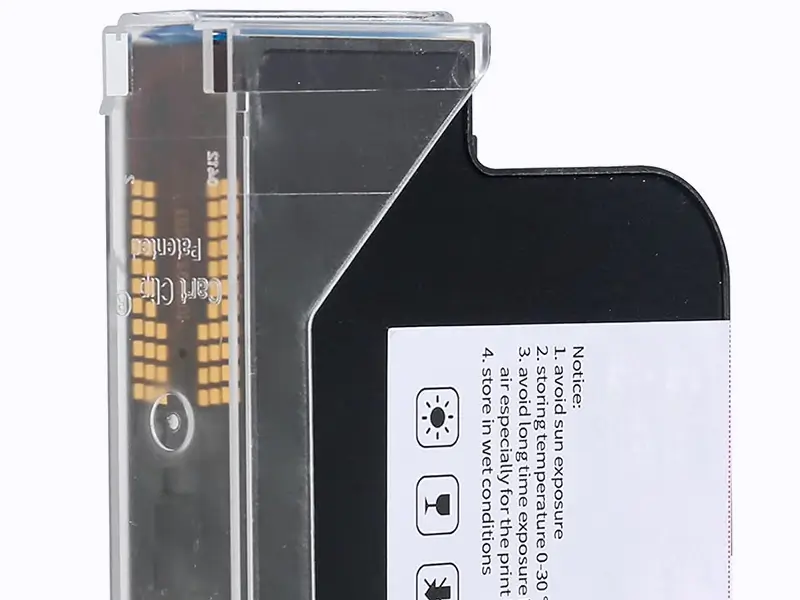
The printheads of inkjet marking machines typically have dozens of micron-sized nozzles. They are finer than a human hair, which means printheads are expensive. In many industrial inkjet systems, the print head costs more than months of OEM ink supply. If you choose third-party ink or low-quality ink, they may leads to:
- ·Nozzle blockage
- ·Inconsistent droplet formation
- ·Increased cleaning cycles
- ·Permanent print head damage
Inkjet printer ink quality: Color and stability
Your logo isn’t just “Blue” – it’s a specific brand identity.
Color accuracy and fade resistance depend on pigment quality and chemical stability. OEM ink undergoes long-term testing under UV light, heat, and humidity. This ensures consistent color from the first print to the last.
With authentic printer ink, you get:
- ·Predictable color profiles
- ·Stable grayscale and barcodes
- ·Strong adhesion to substrates
- ·Resistance to fading and discoloration
Third-party inks often look acceptable at first. Weeks or months later, colors shift. Black turns brown. Logos fade. Barcodes lose contrast. In regulated industries, this can cause compliance failures.
Original factory ink vs Third-party ink cost comparison
Marketing often confuses buyers by focusing only on the “price per liter.”
| Feature | Original factory ink | Third-party ink |
| Initial cost | Higher | Lower |
| Reliability | 99.9% Uptime | Higher clog risk |
| Hidden costs | Low | High (Cleaning, head replacement) |
Myth: Compatible ink is always cheaper. False. If a third-party ink causes just two hours of unplanned downtime on a high-speed line, you have likely lost more in production value than you saved on ink for the entire year.
Warranty and printer lifespan
This point is often overlooked.
In fact, most manufacturers can tell the damage caused by non-OEM consumables. If a third-part ink damages the print head, control board, or ink system, your warranty is usually void. You are essentially “self-insuring” your most expensive equipment to save a few dollars on consumables.
Conclusion
All in all, authentic printer ink is designed for high-volume production environments and plays a critical role in protecting your printing machine hardware.
There is no “wrong” choice—only a risky one. In industrial printing, the most expensive ink is never the one with the highest price tag, but the one that brings your production line to a stop.